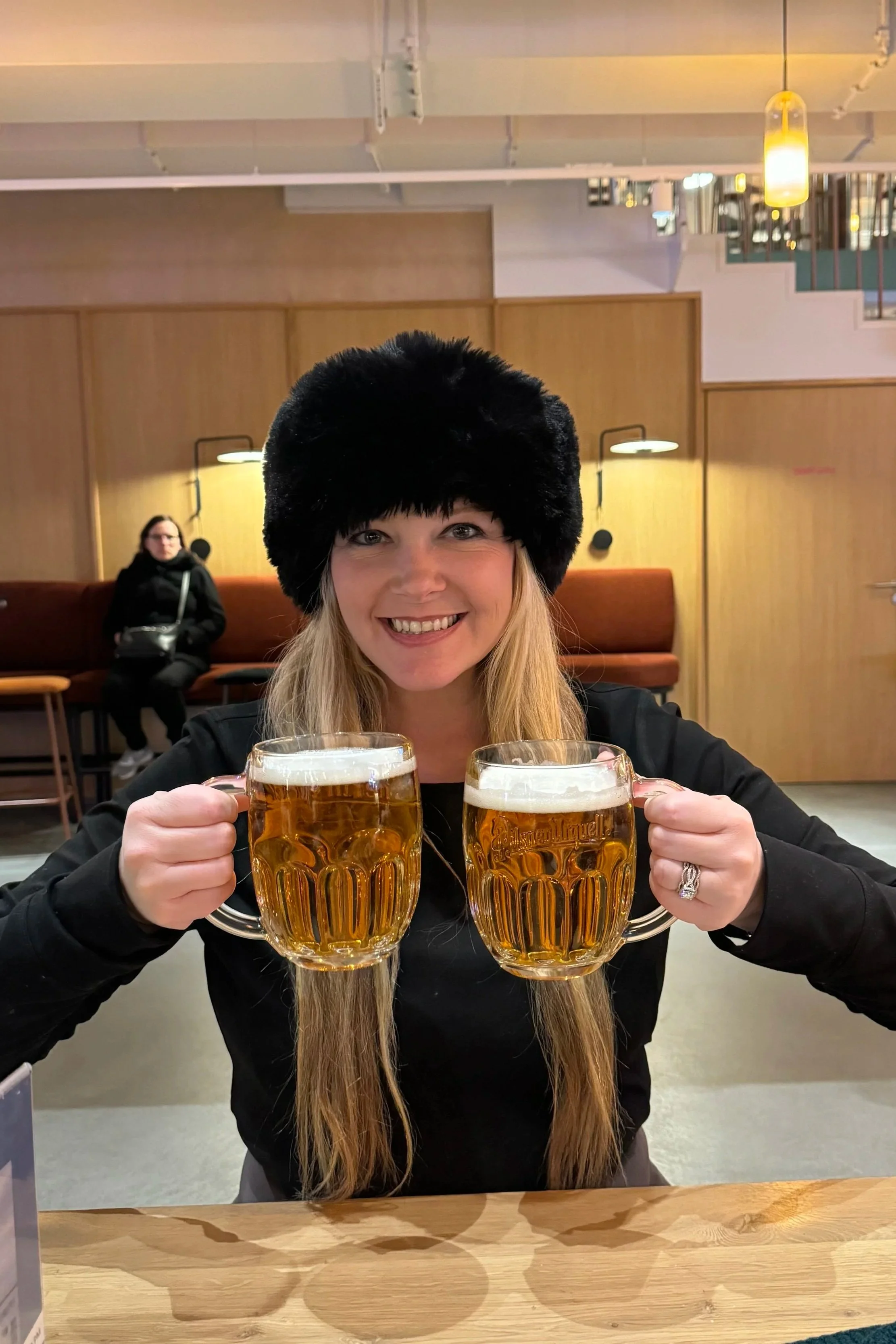
German Christmas Markets: Where Gingerbread Meets Glühwein
A Witty Guide to Yuletide Feasting and Festivity
As I sit here drinking a warm glass of Glühwein out of my favorite Christmas market mug, the scene and temperature are much different than just a year ago. Every winter, as crisp air settles over Germany and twinkling lights spill across historic town squares, the country transforms into a storybook of Christmas markets (Weihnachtsmärkte) bursting with festive charm. It feels like being transported straight to North Pole in a holiday movie. Seeing them littered across your timeline simply does not do it justice.
On our last trip, we stayed right across the street from one of the markets, both a blessing and a curse. The second the market opened for the day, we’d bundle up and wander over for breakfast: a steaming mug of Glühwein (yes, there are no rules on a European vacation), a freshly grilled bratwurst, and a warm, chewy pretzel throwing around “Danke” like a local. There’s something magical about sipping 5 Euro hot wine first thing in the morning while others are headed to work. These markets are something everyone should try to do once in their life and if you’re planning to do so here is a helpful guide to feel more prepared.
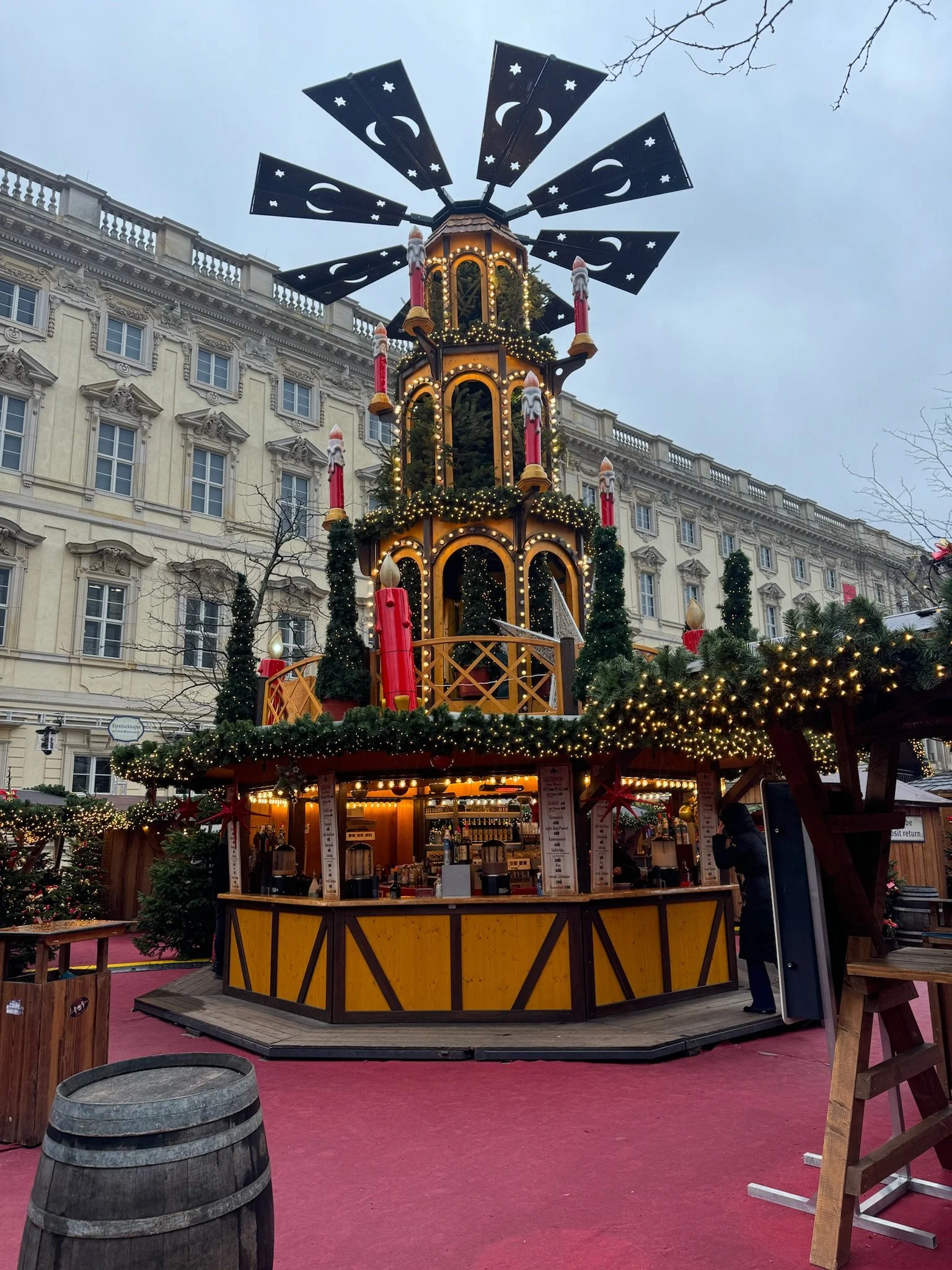
The Market Scene: More Than Just a Festive Flea Market
From the grandeur of Nuremberg’s Christkindlesmarkt to the riverside charm of Cologne’s Cathedral market, each city puts its own delightful spin on tradition. Expect wooden stalls glowing with fairy lights, choirs singing carols you sort-of recognize, and ornaments so dazzling you’ll contemplate a total holiday décor reboot.
Drinks to Keep Your Spirits Bright
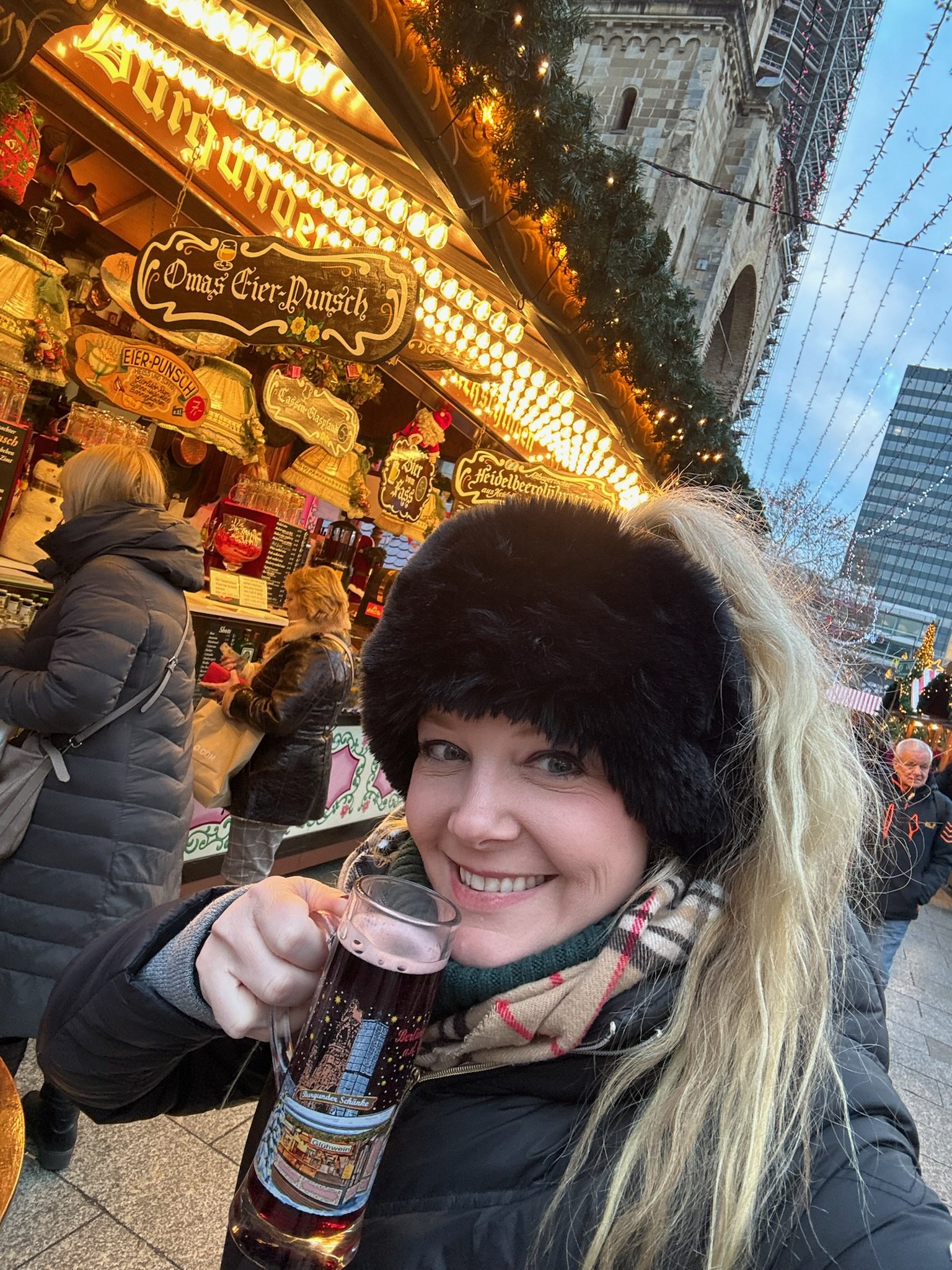
Before you work up an appetite it’s important something warm to sip as you take in the twinkling scene and shop the beautiful little stands. The undisputed champion is Glühwein—a mulled wine spiced with cinnamon, cloves, and orange peel, served in collectible mugs you’ll want to keep forever. The wine itself is cheap (from 3-5 Euros) and you’ll pay a “deposit” for the mug of about 5 Euro, this is the greatest souvenir money can buy.
For those craving a little drama, there’s Feuerzangenbowle: a fiery concoction where a rum-soaked sugarloaf is set ablaze over mulled wine. And for kids, hot chocolate (Heiße Schokolade) is always at hand—rich, creamy, and topped with a generous swirl of whipped cream (London lived off strictly this and pretzels for our week long stay)
Feasting Like a Festive Pro
Let’s be honest: you’re really here for the food. And German Christmas markets deliver, turning every cobblestone corner into a carb lover’s paradise. Here are the classic must-tries (and yes, seconds are encouraged):
Bratwurst: The king of the grill. Served piping hot in a crusty bun with a stripe of mustard, bratwurst is as essential to the Christmas market experience as the tree itself. Pro tip: one is never enough.
Lebkuchen: Imagine gingerbread with an advanced degree in flavor. Spicy, nutty, and often heart-shaped, these festive treats are colorfully iced and make both a sweet snack and a charming gift.
Spaetzle: These pillowy soft egg noodles are comfort food at its finest. At the market, they’re typically tossed with melted cheese and crispy onions—think of it as the German answer to mac and cheese, only cozier.
Raclette: For cheese enthusiasts, raclette is non-negotiable. Watch as a half-wheel of cheese is heated until melted, then scraped onto potatoes, bread, or pickles. It’s gooey, rich, and a spectacle all its own.
Schmalzkuchen: Bite-sized pillows of deep-fried dough, showered with powdered sugar. Crispy on the outside, soft inside, these sweet morsels are dangerously easy to polish off by the dozen.
Flammkuchen: Think pizza with a German accent: a thin, crispy flatbread spread with crème fraîche, onions, and bacon. The bubbly, golden crust makes it a perfect market snack—shareable, but you won’t want to.
We noticed that each market tended to have select items that others didn’t so it’s very important to save your appetite if you’re planning to hit up multiple markets. All sorts of things I’ve never seen before from salmon smoking on open flames (Flammlachs) to chimney cakes (Kürtöskalács), light airy dough roasted on a stick covered in cinnamon sugars. Always make sure you save room for sweets!
Take a Break Inside a Cozy Stube or Alpine Alm
As enchanting as the open-air stalls are, some of the most memorable Christmas market moments happen inside the warm, wood-paneled huts known as Stuben and Almhütten. These cozy pop-ups feel like you’ve stepped straight into an Alpine lodge—soft lighting, rustic wood beams, long community tables, and the kind of warmth that hits your face the second you step inside.
And honestly? They became our little sanctuary. Whenever the cold started to bite (and it does in Germany), we’d duck into a Stube to thaw out. London absolutely loved it—mostly because every break meant another hot chocolate, always topped with a mountain of whipped cream. Watching her sip it with frozen cheeks and the happiest little smile made the whole experience feel even more magical.
Meanwhile, we’d warm back up with Glühwein or punch, maybe grab some käsespätzle or apple streudel, and soak up the lodge-like atmosphere before heading back out for more market exploring. If wandering the stalls is festive… hiding inside a Stube feels like wrapping yourself in a Christmas hug.
A Final Toast to Christmas Cheer
German Christmas markets are a feast for every sense—sight, sound, and especially taste. Whether you’re a devoted foodie or just in it for the festive photos, you’ll find plenty to savor and sip. So bundle up, bring your appetite, and prepare for a whirlwind of Yuletide joy—one delicious bite at a time. Frohe Weihnachten! (That’s “Merry Christmas,” in case you need a phrase between mouthfuls.)